
July 16, 2026
AI Coaching Software for Online Trainers: The 2026 Guide
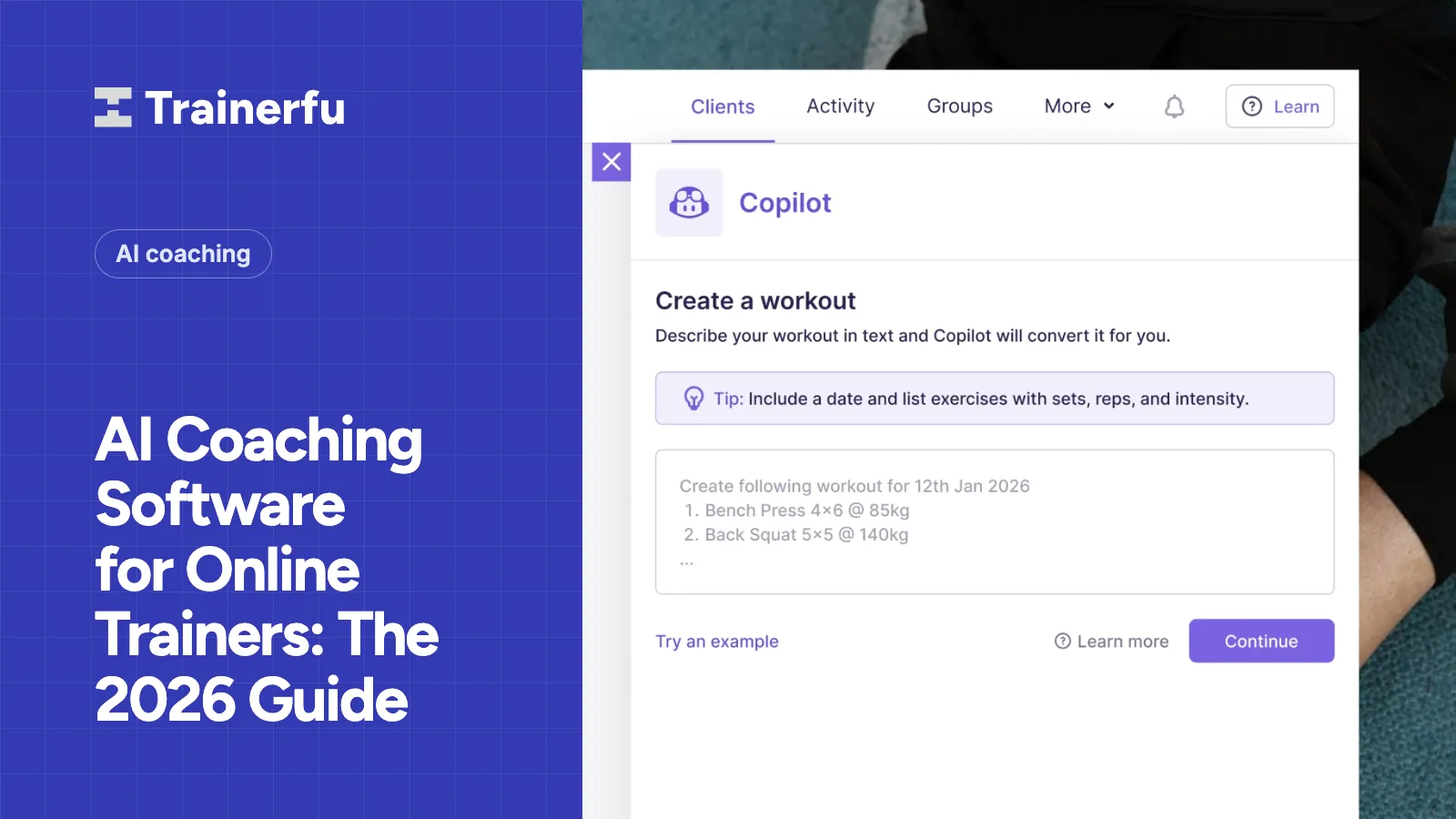
The Quiet Truth About “AI Coaching Software” in 2026
Here is the thing nobody selling software wants to say out loud: for online trainers, most “AI coaching software” is just older software with an AI label added to the pricing page.
Search the term today and every platform claims it. The word sits on nearly every homepage, next to a promise to save you hours. But the software underneath varies wildly. Some of it genuinely does work on your behalf. Some of it reshuffles templates and calls that intelligence.
For an online trainer, that gap matters more than it does for anyone else in the industry. You are not in a room with your clients. You cannot read the room, correct a form cue in person, or notice someone is struggling before they tell you. Your software is your presence between sessions. If the AI in it is shallow, your coaching is shallow at exactly the moments that decide whether a client stays or leaves.
This guide covers what AI coaching software actually does for online trainers, what genuinely matters when choosing it, and how to evaluate the category without getting sold by the homepage.
What “AI Coaching Software” Should Actually Mean for Online Trainers
Before comparing anything, it helps to set the bar. For an online trainer specifically, useful AI is not about generating a flashy first draft. It is about closing the distance that being remote creates.
Good AI coaching software should do these things without a manual or an onboarding call:
- Turn a plain-language description of a client’s goals into a personalised workout plan in minutes, not hours
- Let you create workouts from text so building and editing programmes does not eat your evenings
- Handle the communication layer by letting you create automated messages for check-ins, accountability, and milestones
- Let you build and publish a landing page for a new programme or offer without a developer
- Surface which clients actually need your attention, so your limited hours go where they matter rather than being spread evenly across everyone
If a platform cannot do most of these, it is a delivery tool with an AI badge, not AI coaching software.
The One Distinction That Separates Real AI From Marketing AI
There is a single question that sorts the entire category: does the AI stop once the plan is delivered, or does it keep working after the client starts logging?
Generation AI builds a draft from a client’s goals, level, and equipment. You review it, adjust it, and assign it. After that, the AI is finished. Progression, adjustments, and follow-up are back on you.
Adaptation AI treats generation as the starting point. It reads what the client logs, spots progression opportunities, flags fatigue or missed sessions, and surfaces the decisions that need a human coach.
For an online trainer, this is the whole game. When you coach 30 or 40 people you will never meet in person, the difference between software that waits for you and software that flags what needs attention is the difference between a business that scales and one that quietly caps at the number of clients you can manually review each week.
What to Look For (and What to Ignore)
Not every advertised feature is worth paying for. A few things genuinely matter for online coaching, and a few are noise.
Worth prioritising:
- Depth of automation, specifically whether messages can trigger from client behaviour (a missed session, a hit milestone) rather than only from the calendar
- Whether the workout builder is unified, so creating and scheduling happen in one view instead of forcing you between screens
- How much of the platform actually works on mobile, since online coaching rarely happens at a desk
- Whether nutrition, habits, and communication live in the same system, or require bolted-on tools
Usually noise:
- Long integration lists you will never connect
- “AI” features that only rephrase existing templates
- Enterprise features built for multi-trainer studios if you are a solo online coach
If you want a clear-eyed view of how much to lean on the software versus your own judgement in the first place, this honest 2026 comparison of AI and human trainers is a useful reference before you commit to any platform.
5 Best AI Coaching Software Platforms for Online Trainers in 2026
With the evaluation criteria set, the platforms below are five of the strongest options for online trainers in 2026. This is not a universal ranking. Each tool is strongest at a different part of the coaching workflow, so the right choice depends on whether your main bottleneck is programme creation, ongoing adaptation, client check-ins, branding, or studio operations.
[Image space: overview graphic comparing the five AI coaching platforms and their best-fit use cases]
1. Trainerfu
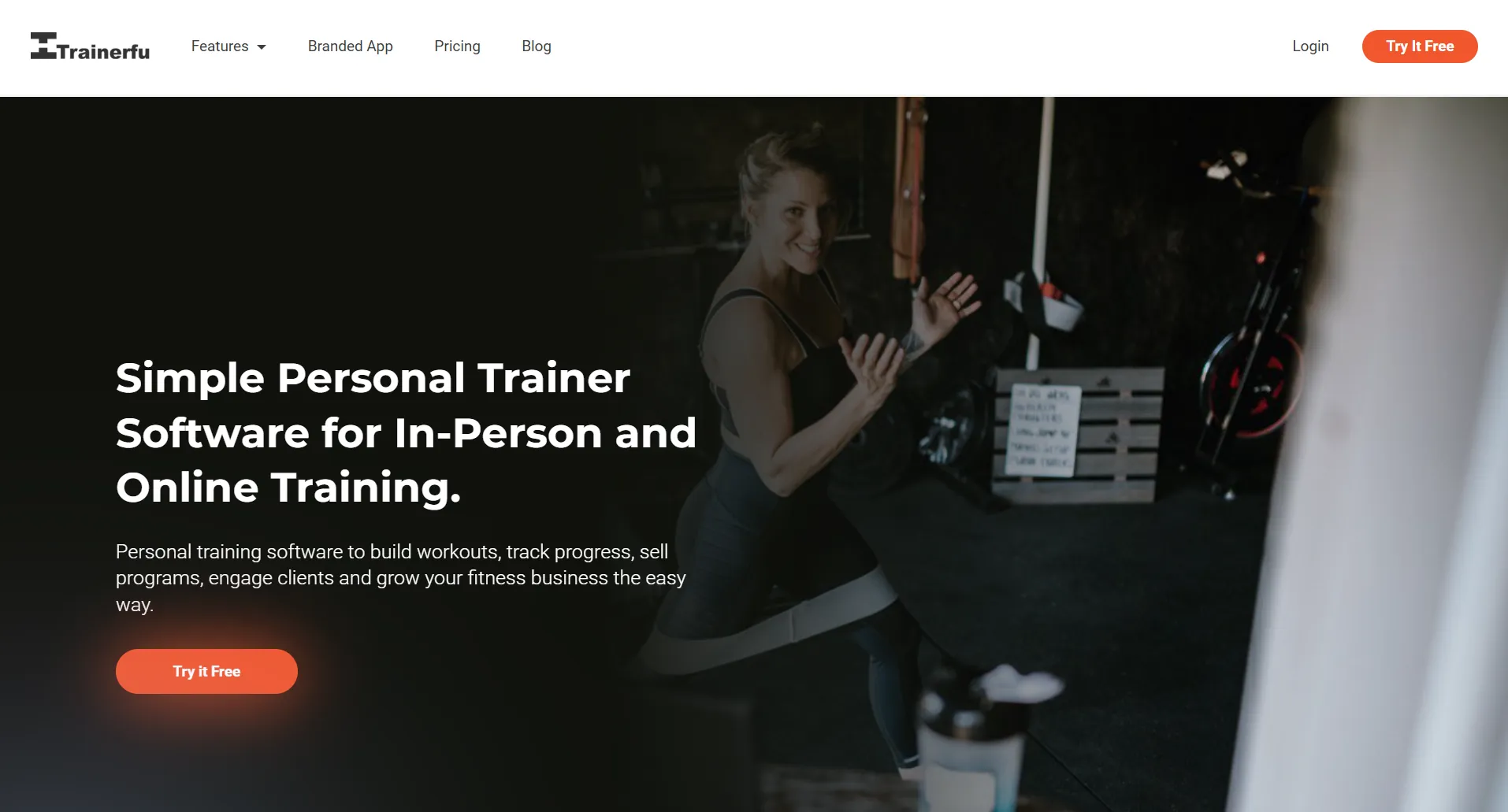
Best for: Solo online trainers and small coaching teams that want AI to keep working after a programme is assigned.
Trainerfu is built around the remote coaching workflow rather than studio administration. Its AI can turn plain-language instructions into workouts and multi-week plans, analyse programme structure, support progression changes, and help trainers act on client behaviour such as missed sessions, weak performance, or stalled progress. The platform also brings workout delivery, automated messages, nutrition, habit coaching, and landing pages into one system, which reduces the need to connect several separate tools.
The main reason Trainerfu stands out in this list is its focus on adaptation rather than generation alone. The AI is designed to surface the clients and coaching decisions that need attention after delivery, instead of only producing a first draft and waiting for the trainer to notice every change manually.
Watch for: Trainerfu is aimed mainly at online and hybrid coaching. A gym that depends on front-desk scheduling, staff permissions, and in-person class booking may need a studio-management platform instead.
2. Everfit
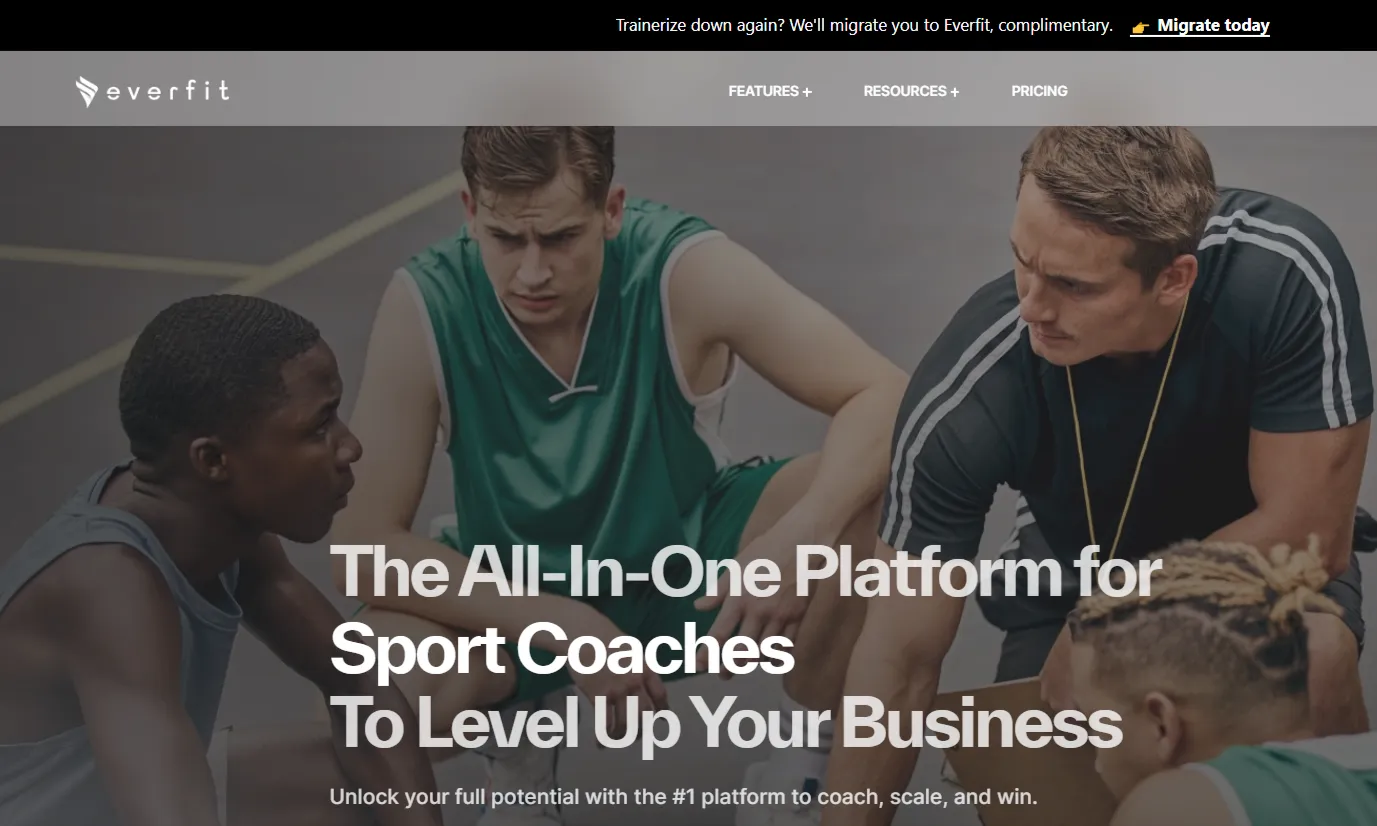
Best for: Coaches who want a broad all-in-one platform covering training, nutrition, habits, automation, payments, and branded client delivery.
Everfit combines a large coaching feature set with an AI Workout Builder that converts text-based programme notes into trackable workouts. It supports strength, interval, timed, and AMRAP formats, while the wider platform includes client messaging, habit tasks, nutrition tools, forms, group coaching, payments, and custom branding.
It is a strong option when you want one platform to cover several coaching and business functions, particularly if you run individual and group programmes. Its AI is most clearly positioned around faster workout creation, so trainers looking for ongoing programme adaptation should test what happens after the workout has been assigned, not just how quickly the first draft appears.
Watch for: Everfit currently presents parts of its AI workout experience as beta, so confirm which AI functions are available on your plan and whether any required features are separate add-ons.
3. ABC Trainerize
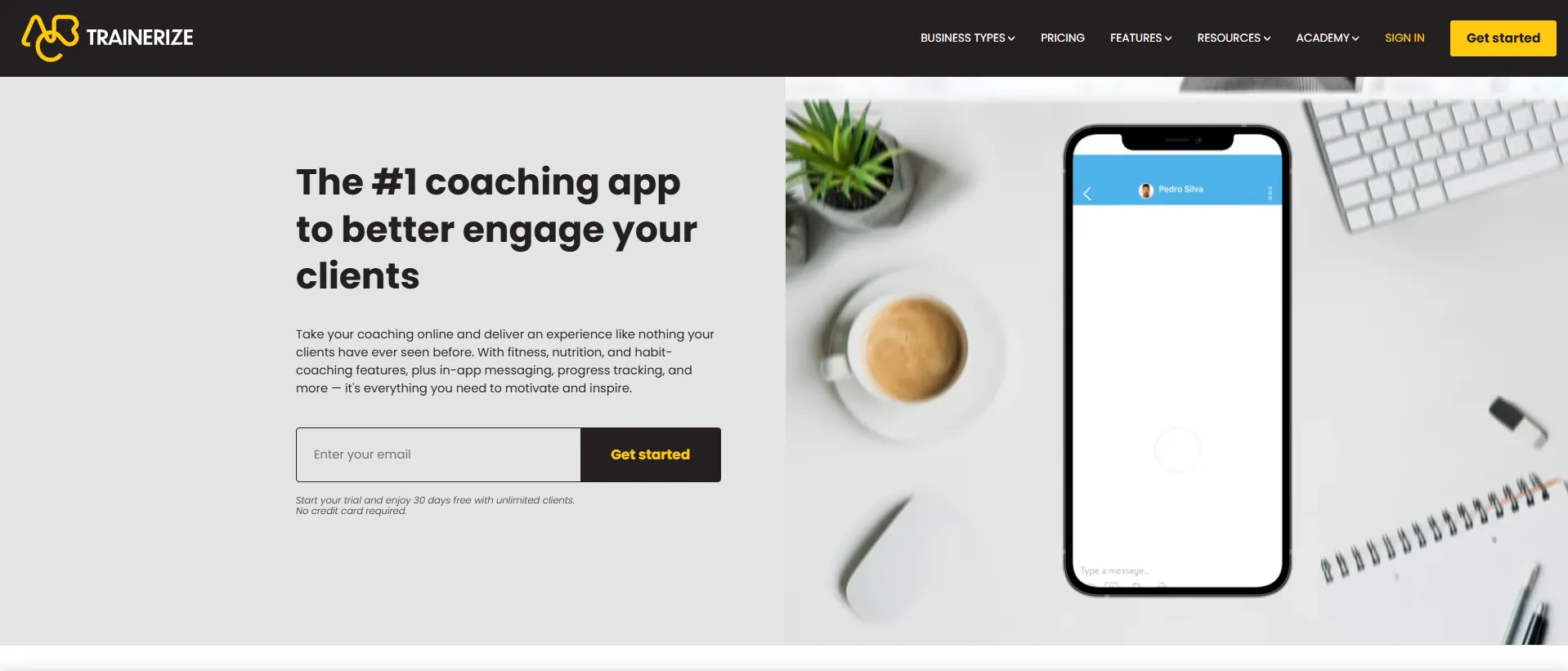
Best for: Trainers already using the Trainerize ecosystem who want faster creation of individual workouts.
ABC Trainerize has added an AI Workout Builder that turns written prompts into structured workouts with exercises, sets, reps, rest periods, supersets, and circuits. It can use a client’s goals, experience level, and restrictions when generating a workout, and the trainer can refine the draft before saving it to the normal workout builder.
This makes Trainerize useful for reducing the time spent building one-off sessions without changing the rest of an established Trainerize workflow. The boundary is important, though: the AI builder creates one workout at a time. It does not currently create complete programmes or training phases, assign workouts automatically, or continue editing through the AI chat after the draft has been confirmed.
Watch for: The AI Workout Builder is in open beta and is currently a generation tool rather than a full adaptation layer.
4. PT Distinction
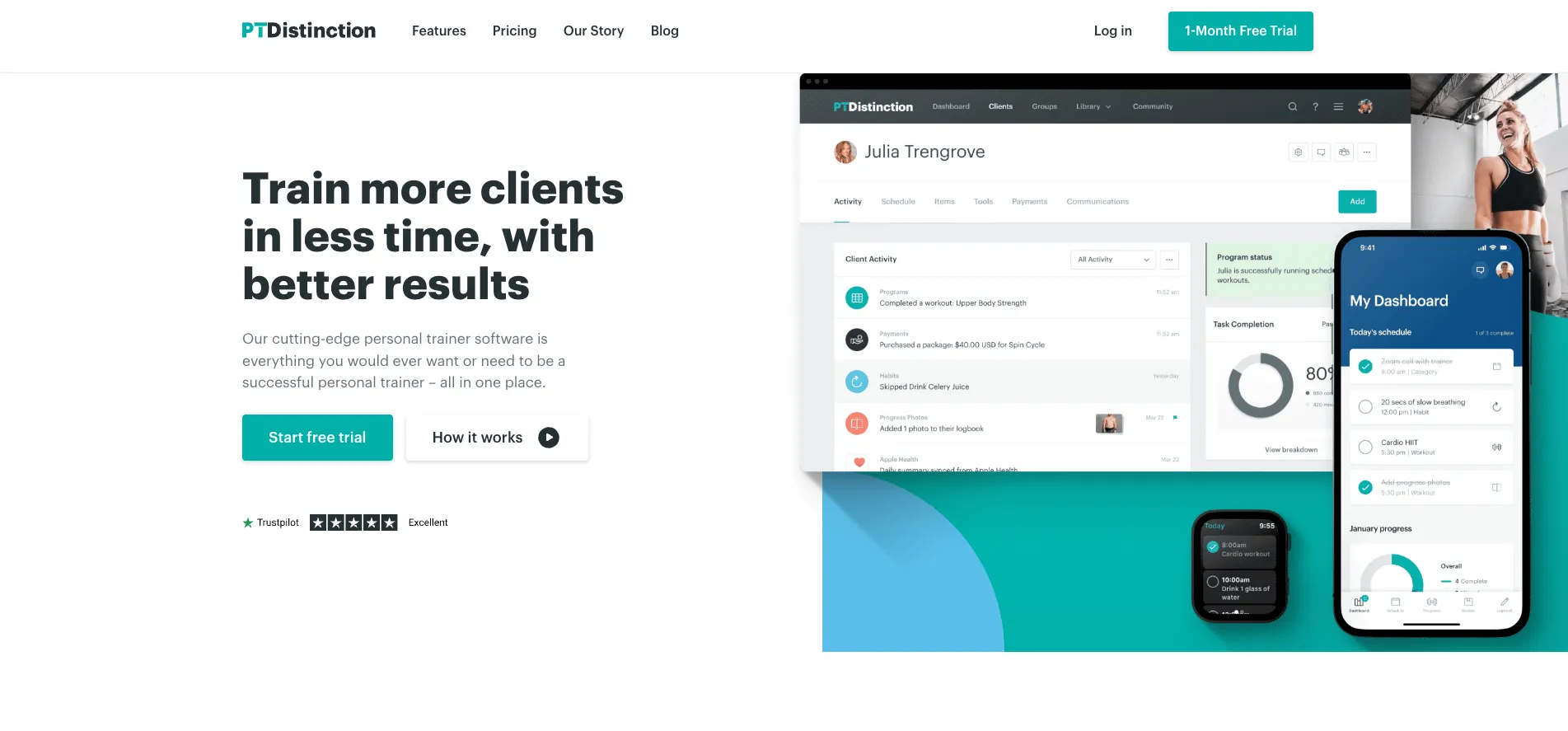
Best for: Coaches who want AI-assisted programme creation, meal planning, and coaching content in a feature-rich platform.
PT Distinction offers an AI Program Builder for personalised training plans, an AI Meal Planner for client-specific nutrition plans, and an AI Assistant for workout ideas, recipes, blogs, and social content. These tools sit alongside branded apps, assessments, groups, nutrition coaching, automation, and the broader client-management features expected from a mature personal training platform.
It is particularly relevant for trainers who want AI across several creation tasks rather than only inside the workout builder. The platform also suits coaches who need more configuration and studio-style flexibility. During a trial, check how easily its generated plans fit your methodology and whether progress-based adjustments happen automatically or still depend on manual review.
Watch for: A wider feature set can mean more setup. Test the mobile workflow and the number of steps required for your most common weekly tasks.
5. My PT Hub
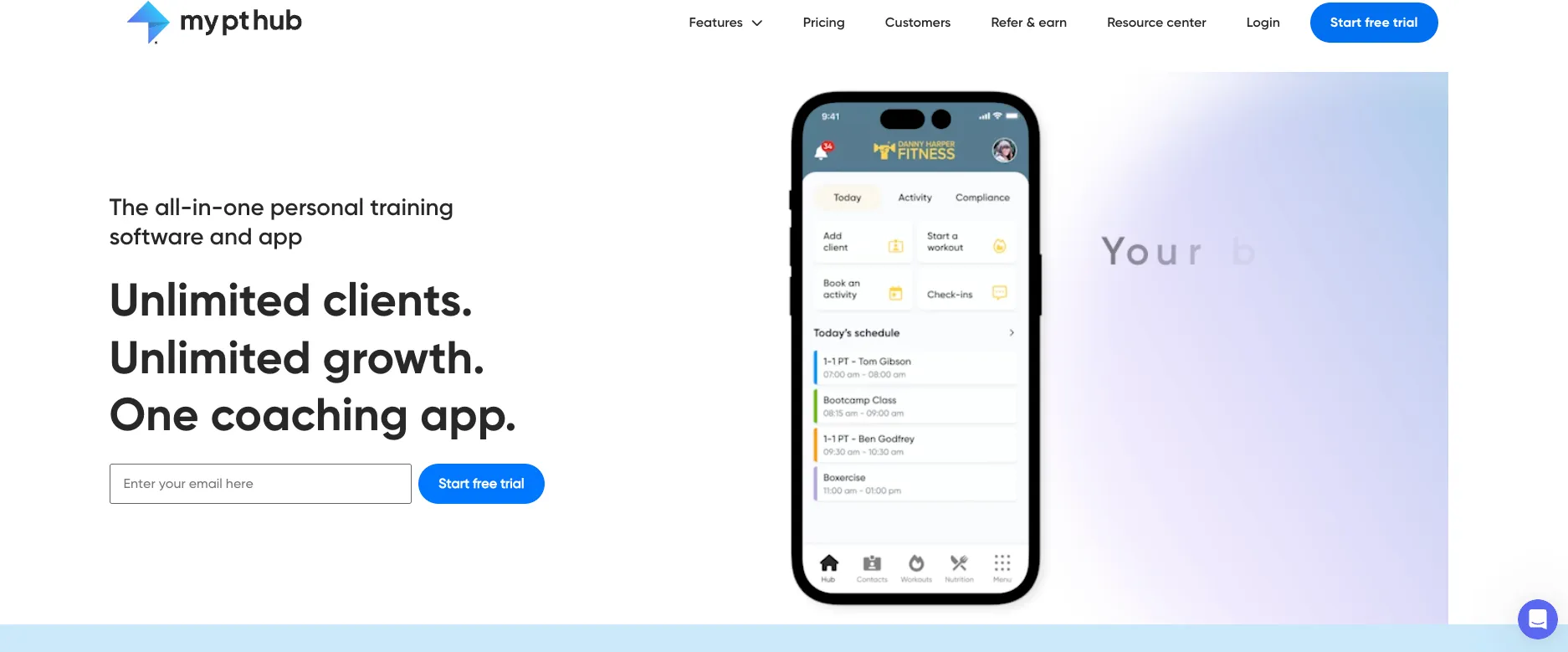
Best for: Online trainers whose biggest bottleneck is reviewing client check-ins and writing personalised feedback.
My PT Hub approaches AI from the communication and accountability side of coaching. Its Check-Ins AI analyses client responses alongside workout data, nutrition logs, habits, personal bests, and recent check-in history. It then summarises the main points and drafts a personalised response that the trainer can review, edit, or regenerate before sending.
That makes it a practical option for coaches who already know how they want to programme but lose several hours each week reading forms and writing similar feedback. The wider platform includes workouts, nutrition plans, automated check-ins, scheduled messages, bookings, payments, community features, and white-label options.
Watch for: Its clearest AI strength is check-in analysis rather than end-to-end adaptive programming, and Check-Ins AI may be sold as an additional feature depending on the plan.
The useful comparison is not which platform has the most features. It is which one removes the most manual work from the part of your coaching business that is currently limiting growth. Use the list above to narrow the field, then run the same real-client test in each shortlisted platform.
How to Actually Test a Platform Before Committing
Homepages are designed to sell. The only reliable way to know whether AI coaching software fits how you work is to run a real scenario through it.
Bring one real client profile into a free trial. Build them a plan. Log a few sessions with different outcomes: one strong, one missed, one where the numbers stall. Then watch what the software does next. Genuine adaptation AI surfaces a recommendation. Generation AI does nothing until you act. That single experiment tells you more than any feature list.
While you are testing, pay attention to the operational feel, not just the outputs. How many clicks does a routine task take? Does the mobile app carry the real work, or send you back to a laptop? For a deeper look at how coaching software fits alongside the rest of running an online business, our guide to what an AI personal trainer is covers the wider picture.
Transparency note: This guide is published by Trainerfu, an AI coaching platform for personal trainers. We have aimed to describe the category honestly rather than steer you toward any one tool, and we hold Trainerfu to the same standard as everything else discussed here.
Where This Leaves You
AI coaching software for online trainers is worth adopting, but not because of the label. It is worth it when the AI closes the distance that being remote creates: building plans faster, keeping clients accountable automatically, and telling you who needs you before they go quiet.
The platforms that deliver that are not necessarily the ones with the longest feature list. They are the ones where the AI does meaningful work after delivery, where the core coaching tasks live in one place, and where the mobile experience matches how online coaching actually happens.
Trainerfu is built around exactly that use case, and the most honest way to judge it is the test above: bring a real client into the 14-day free trial, log a few sessions, and see whether it adapts or waits for you. No credit card required.
Where it is not the right fit: if you run a multi-trainer studio or gym that needs front-desk scheduling, staff role management, and in-person class booking as the core of the software, a platform built for studio operations will serve you better than one built around the solo and online coaching workflow.
Frequently Asked Questions
What is AI coaching software for online trainers?
It is software that uses AI to help online trainers build workout plans, personalise programmes, automate client communication, and monitor client activity between sessions. The most useful versions go beyond generating a first draft and continue adapting recommendations based on what clients actually log after the plan is delivered.
Is AI coaching software worth it for a solo online trainer?
For most solo online trainers, yes. The time it saves on programme building and routine communication typically pays for itself once it prevents the manual workload from capping how many clients you can handle. The wrong platform, however, adds cost through stacked add-ons you rarely use, so match the tool to your actual workflow.
What is the difference between generation AI and adaptation AI?
Generation AI builds a workout draft and then stops, leaving progression and adjustments to the trainer. Adaptation AI keeps working after delivery, reading client logs and surfacing recommendations for load changes, missed sessions, and progression. For online coaching, where you are not present in person, adaptation AI is the more meaningful capability.
Can AI coaching software replace an online personal trainer?
No, and the better tools do not try. AI handles the repetitive and operational layer, including programme drafts, automated messages, and activity monitoring, so the trainer can focus on relationships, judgement calls, and the coaching decisions no software can make. The goal is to extend a trainer’s reach, not remove them.
How do I choose AI coaching software for my online coaching business?
Start with your biggest bottleneck. If programme building is eating your time, prioritise a strong workout builder and text-to-workout generation. If client retention is the problem, prioritise behaviour-triggered automation and the ability to see who needs attention. Then test one real client through a free trial before committing, since the operational feel matters as much as the feature list.
Similar articles
AI coaching
AI Workout Periodization: How Smart Software Programs Progressive Overload
AI workout periodization explained: how smart coaching software programs progressive overload, manages training phases, and adapts automatically so clients keep making progress in 2026.
Read article
AI coaching
How Trainers Are Using AI to Retain Clients Longer (2026 Data)
An honest, data-backed guide to how AI fitness coaching supports client retention through better timing, personalisation, feedback, and trainer follow-up.
Read article
AI coaching
5 Best FitSW Alternatives for Personal Trainers
An honest look at the best FitSW alternatives in 2026, covering AI features, client management, and which platform fits your coaching business.
Read article